The Ultimate Guide to Watering Indoor Plants: Avoid Overwatering and Keep Your Greens Thriving
🌱 Introduction
Watering seems simple—until your peace lily wilts or your succulent turns to mush.
In fact, improper watering is the most common reason indoor plants struggle or die. While some plants thrive on regular hydration, others prefer to be left alone for weeks. So, how do you get it right?
This guide will show you how to water indoor plants the right way, with practical tips on frequency, technique, and spotting early signs of trouble. Whether you’re new to houseplants or looking to fine-tune your routine, this is the essential knowledge every indoor gardener needs.
💧 How Often Should You Water Indoor Plants?
There’s no universal rule—but here’s a helpful guideline based on plant type:
| Plant Type | Watering Frequency |
|---|---|
| Succulents & Cacti | Every 2–3 weeks |
| Snake Plant / ZZ Plant | Every 10–14 days |
| Peace Lily | When top inch of soil is dry |
| Ferns & Calatheas | 1–2 times per week |
| Pothos & Philodendron | Once a week or when dry |
💡 Try the “Finger Test”:
Stick your finger 1–2 inches into the soil.
- Dry? Time to water.
- Still moist? Wait a few more days.
🚿 The Best Way to Water Indoor Plants
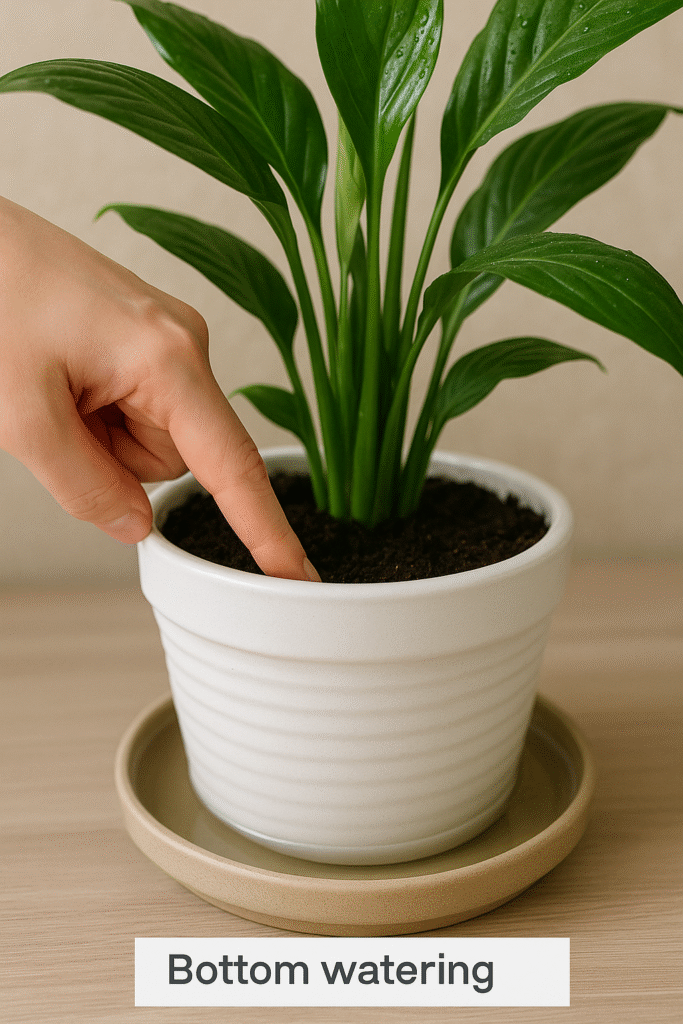
🪴 A. Bottom Watering
- Place your pot in a shallow dish of water
- Let it absorb moisture for 15–30 minutes
- Drain excess water afterward
Benefits:
✅ Prevents overwatering
✅ Promotes deep root growth
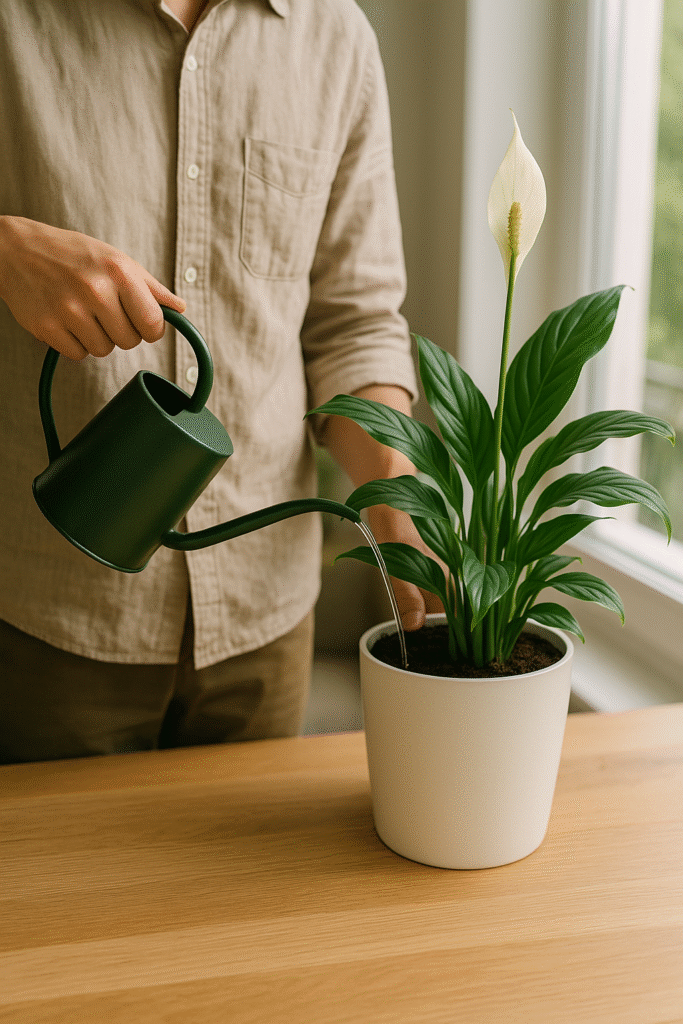
🌧️ B. Top Watering
- Use a long-spout watering can
- Water slowly until it runs out the drainage holes
- Discard excess from the saucer
Tip: Avoid splashing leaves, especially in low-light plants.
💨 C. Misting
- Ideal for humidity-loving tropical plants
- Mist leaves with lukewarm water once or twice a week
Note: Misting is a supplement, not a main watering method.
❗ Common Watering Mistakes to Avoid
Even experienced plant parents make these:
- 💧 Overwatering on a schedule instead of checking soil
- 🚫 No drainage holes in your pots
- ❄️ Using cold water straight from the tap
- 🌙 Watering at night, which encourages fungal issues
Fixing these habits can save your plants and help them thrive.
🚨 Signs of Overwatering vs. Underwatering
Knowing what to look for is half the battle. Here’s how to tell:
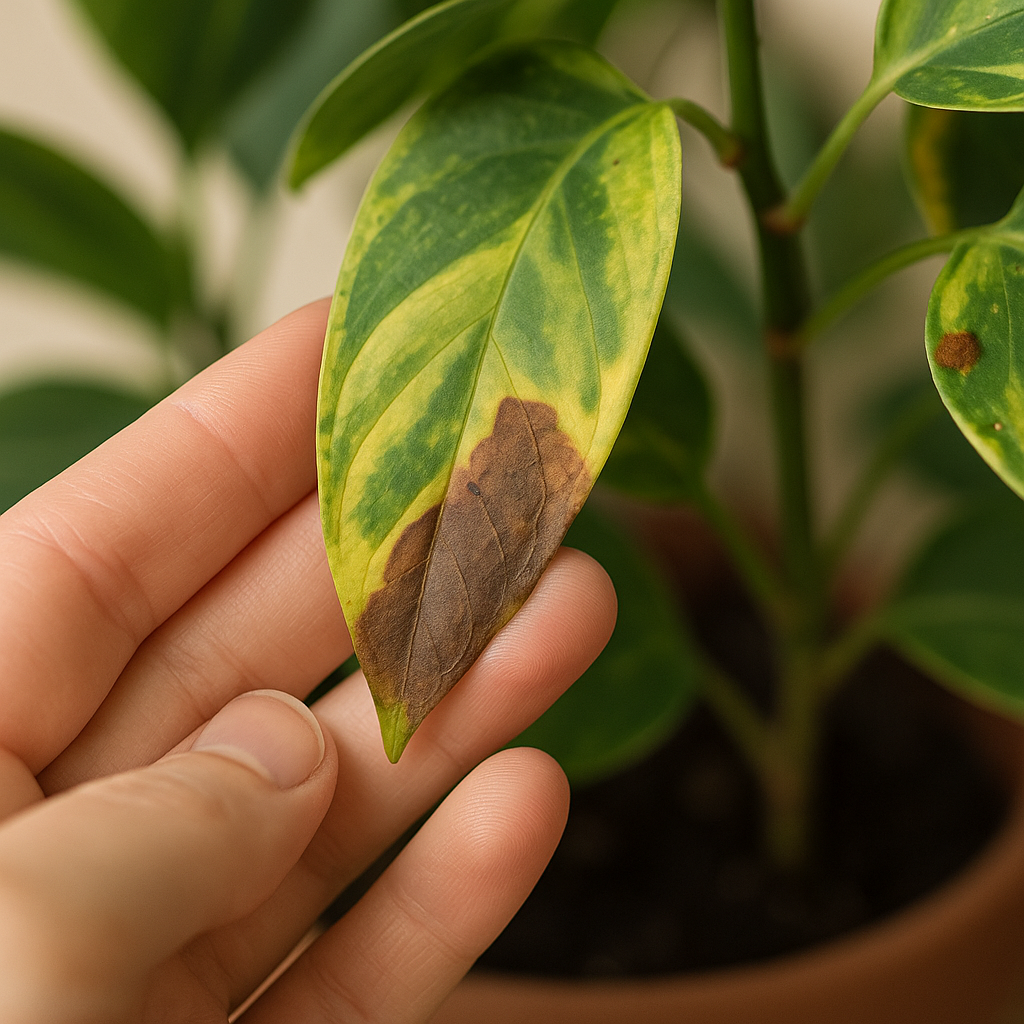
| Symptom | Overwatering | Underwatering |
|---|---|---|
| Leaf color | Yellowing or mushy | Dry, crispy edges |
| Soil | Always wet or soggy | Bone dry and cracked |
| Smell | Musty, moldy smell | No scent or dusty |
| Growth | Drooping, rot-prone roots | Wilting, stunted growth |
🕒 How to Create a Watering Schedule
Customise your care with a few simple tools:
- 📔 Keep a watering journal or calendar
- 📱 Try apps like Planta or Greg
- 🌤️ Adjust by season – less water in winter
- 🪴 Group plants with similar needs together
- 🕘 Water in the morning so leaves dry out by night
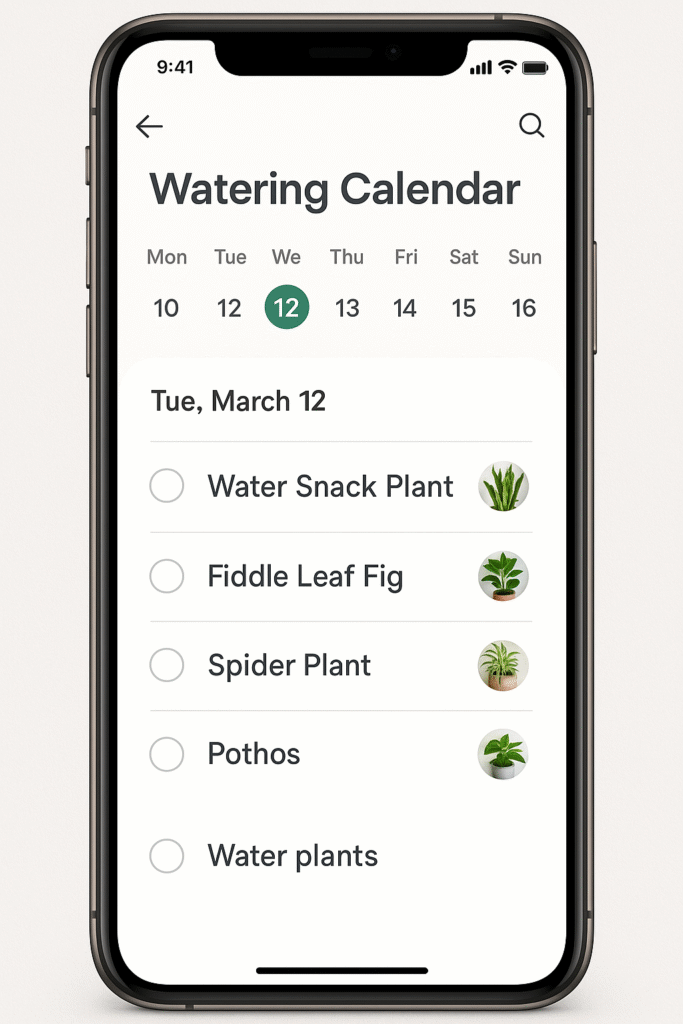
Being consistent—but flexible—is key.
🧪 Bonus Tips for Smart Watering
Take your watering game up a notch:
- 🌧️ Use filtered or rainwater for sensitive plants like calatheas
- 🌿 Try self-watering pots for busy lifestyles
- 📊 Add a moisture meter to avoid guesswork
- 💨 Consider your room’s humidity—dry air = more watering
The goal is not to follow a rigid routine—but to observe and adjust.
💬 Conclusion
Watering your indoor plants isn’t about frequency—it’s about attention and balance. Check the soil, understand your plant’s needs, and respond accordingly. With a little observation and the right technique, you’ll have a jungle of healthy, happy houseplants in no time.
👉 Got a go-to watering trick or a cautionary tale? Share it in the comments!
4 Comments