10 Herbs You Can Grow Indoors Without Sunlight (Perfect for Low-Light Spaces)
Have a kitchen that barely sees the sun? Living in an apartment with shaded windows? You’re not alone—and the good news is that you can still enjoy a thriving indoor herb garden.
Many herbs can grow indoors without direct sunlight, provided they receive enough indirect daylight or supplemental light from a grow light. Some herbs also tolerate lower-light conditions considerably better than sun-loving plants such as basil and rosemary.
Whether you want fresh herbs for cooking, a little more greenery in your home, or simply an easy indoor gardening project, the herbs below are excellent places to start.
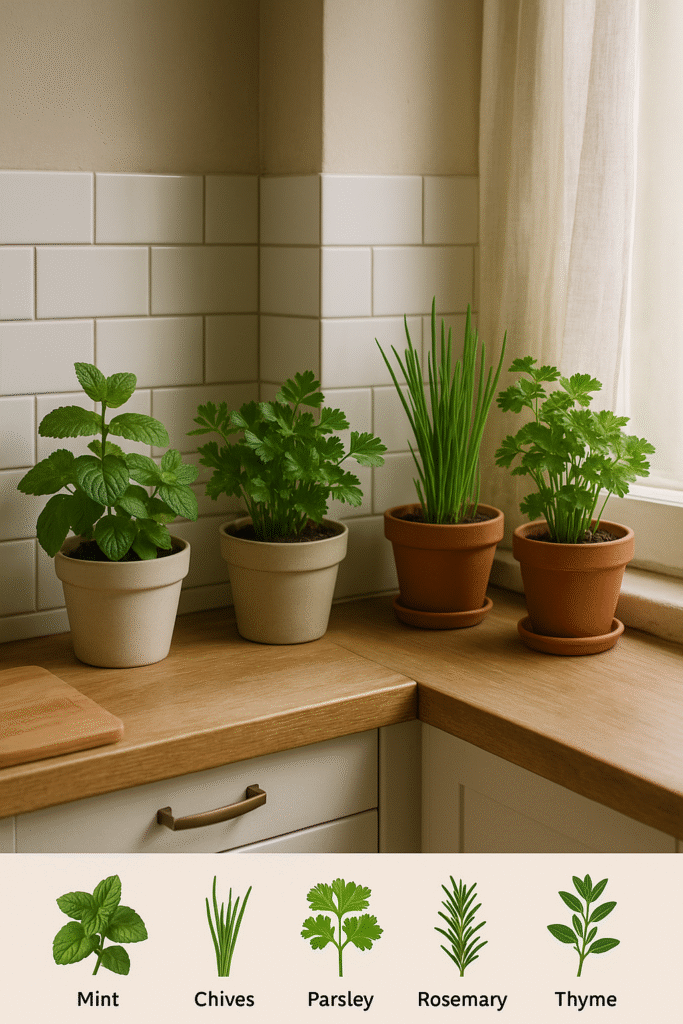
No direct sunlight? No problem. With the right herbs, good placement, and supplemental lighting when necessary, even a relatively low-light space can support an indoor herb garden.
Disclosure: This post contains affiliate links. As an Amazon Associate I earn from qualifying purchases, at no extra cost to you.
🌿 Can Herbs Really Grow Without Sunlight?
Yes—but there’s an important distinction.
Herbs cannot grow in complete darkness. Like other green plants, they need light for photosynthesis. However, that light doesn’t necessarily have to come from direct sunlight.
Depending on the herb and your indoor conditions, the light can come from:
- Bright or moderate indirect daylight
- A nearby window that doesn’t receive direct sun
- Supplemental LED grow lights
- A combination of natural and artificial light
Some herbs tolerate lower light levels better than others, although growth may be slower and less vigorous than it would be under ideal lighting.
If your room receives very little natural daylight, a small grow light can make a significant difference.
🌱 10 Herbs That Can Grow Indoors Without Direct Sunlight
Here are 10 herbs worth considering for an indoor garden where direct sunlight is limited.
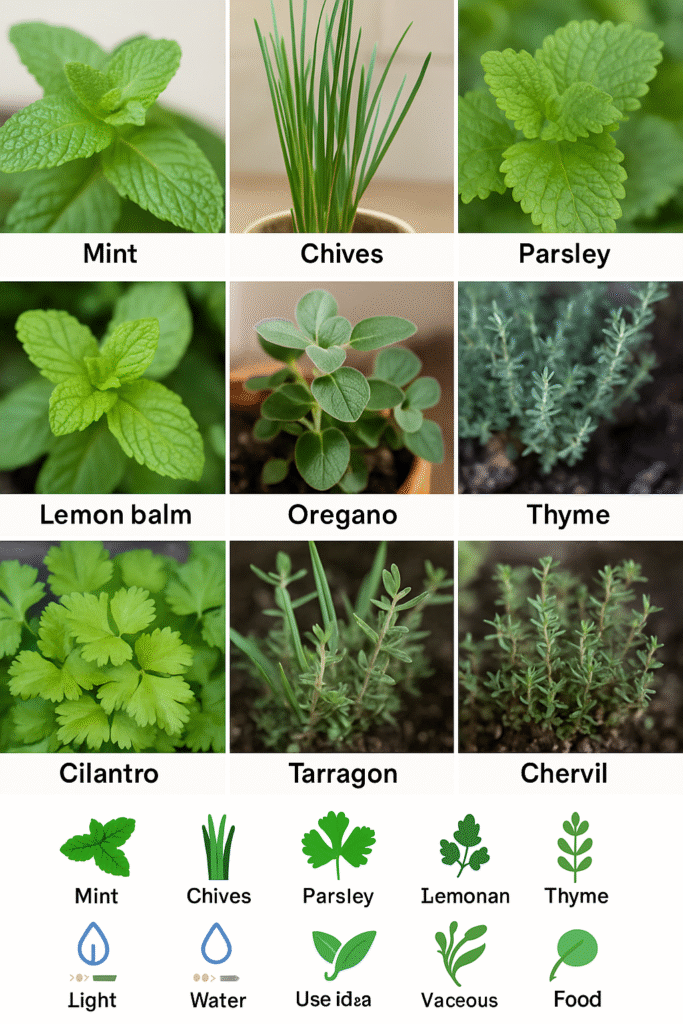
1. Mint
Light needs: Moderate to bright indirect light; supplemental lighting can help in darker rooms.
Why it works: Mint is vigorous, adaptable, and relatively forgiving, making it one of the easiest herbs for beginners to grow indoors.
Growing tip: Keep the soil consistently moist but not waterlogged. It’s usually best to give mint its own container because its roots spread aggressively.
Uses: Tea, desserts, salads, drinks, sauces, and garnishes.
2. Parsley
Light needs: Moderate indirect light; supplement with a grow light if natural light is very limited.
Why it works: Parsley can adapt to indoor growing conditions and doesn’t require the intense direct sunlight demanded by some Mediterranean herbs.
Growing tip: Harvest the larger outer stems first while allowing the younger growth in the center to continue developing.
Uses: Soups, salads, sauces, garnishes, and marinades.
3. Chives
Light needs: Moderate to bright indirect light or supplemental grow lighting.
Why it works: Chives are compact, perennial, and easy to harvest repeatedly, making them well suited to small indoor gardens.
Growing tip: Regular harvesting encourages fresh growth. Cut the leaves above the base rather than pulling the entire plant.
Uses: Eggs, potatoes, soups, dips, salads, and garnishes.
4. Cilantro
Light needs: Bright indirect light; supplemental lighting may be necessary in particularly dim rooms.
Why it works: Cilantro grows relatively quickly and can be harvested while young.
Growing tip: Keep it relatively cool. Excessive heat can cause cilantro to bolt and produce flowers prematurely.
Uses: Salsa, curries, salads, tacos, chutneys, and Asian-inspired dishes.
5. Lemon Balm
Light needs: Moderate to bright indirect light.
Why it works: Lemon balm is a member of the mint family and is fairly adaptable when grown in containers.
Growing tip: Keep the soil moderately moist and prune regularly to encourage compact, bushy growth.
Uses: Herbal tea, desserts, salads, and flavored drinks.
6. Thyme
Light needs: Bright indirect light is preferable; use supplemental lighting when natural light is inadequate.
Why it works: Thyme stays relatively compact and works particularly well in small pots.
Growing tip: Allow the upper layer of soil to dry slightly between waterings. Thyme dislikes constantly wet roots.
Uses: Roasted vegetables, poultry, soups, stews, and marinades.
7. Oregano
Light needs: Bright indirect light or supplemental grow lighting.
Why it works: Oregano is compact and easy to maintain in a container, although it generally performs better with stronger light than herbs such as mint.
Growing tip: Avoid overwatering. Allow the soil to dry slightly before watering again.
Uses: Pizza, pasta sauces, marinades, roasted vegetables, and Mediterranean dishes.
8. Chervil
Light needs: Moderate indirect light.
Why it works: Chervil generally prefers cooler conditions and doesn’t require intense direct sunlight.
Growing tip: Keep the soil evenly moist and protect the plant from excessive indoor heat.
Uses: Egg dishes, salads, soups, herb butter, and sauces.
9. French Tarragon
Light needs: Bright indirect light; supplemental lighting can help during periods of insufficient natural light.
Why it works: Tarragon can be grown in containers and doesn’t necessarily need intense direct sunlight throughout the day.
Growing tip: Use well-draining soil and avoid keeping the roots constantly wet.
Uses: Sauces, chicken, fish, vinegar infusions, and herb butter.
10. Vietnamese Coriander
Light needs: Moderate indirect light or partial shade.
Why it works: Vietnamese coriander tolerates warm and humid conditions and can be a useful alternative to traditional cilantro.
Growing tip: Unlike many Mediterranean herbs, it prefers consistently moist soil and warmer temperatures.
Uses: Salads, soups, noodles, and Southeast Asian dishes.
💡 What If Your Room Has Very Little Natural Light?
There’s a difference between low light and no usable light.
A plant sitting several feet away from a small window may receive far less light than it appears to receive to your eyes. If your herbs become pale, develop long weak stems, lean heavily toward the window, or produce very little new growth, insufficient light may be the problem.
A few simple adjustments can help.
Move Herbs Closer to the Window
Even if the window receives no direct sunlight, placing herbs closer to it can significantly increase the amount of indirect daylight they receive.
Rotate Your Pots
Turn your herb pots periodically so that one side doesn’t constantly face the light source. This can encourage more balanced growth.
Use Reflective Surfaces
A light-colored wall or other reflective surface behind your plants can help make better use of available natural light.
Consider an LED Grow Light
If your herbs receive very little usable daylight, supplemental lighting is usually a better solution than trying to grow them in near-darkness.
For a few herb pots, you don’t necessarily need a large professional growing setup. A compact full-spectrum LED grow light can be much easier to position over a windowsill, shelf, or countertop herb garden.
🌱 A Practical Grow Light for Small Indoor Herb Gardens
If your herbs aren’t getting enough natural light, a compact 6000K full-spectrum clip-on LED grow light can be a convenient solution for a few pots on a windowsill, shelf, or kitchen counter. This model has flexible light arms, adjustable brightness, and a built-in timer, making it easier to provide consistent supplemental light without taking up much space.
→ Check this full-spectrum grow light on Amazon
Not sure which grow light is right for your setup? Read my [Best Grow Lights for Herbs Indoors: Top Picks & Expert Tips] guide for a more detailed comparison.
💧 Don’t Overwater Low-Light Herbs
One of the biggest mistakes when growing herbs indoors is assuming that struggling plants always need more water.
In lower-light conditions, plants may use water more slowly. That means soil can remain wet for longer than it would outdoors in bright sunshine.
Constantly wet soil can deprive roots of oxygen and contribute to root problems.
Instead of watering on a rigid schedule, check the soil first. Different herbs also have different moisture requirements: mint and Vietnamese coriander generally appreciate more consistent moisture, while thyme and oregano prefer conditions that are allowed to dry somewhat between waterings.
🪴 Good Drainage Matters
The container can be just as important as the watering technique.
Whenever possible, grow your herbs in pots with drainage holes so excess water can escape instead of collecting around the roots.
For an indoor garden, pots with matching saucers or drainage trays are particularly convenient because they protect windowsills, shelves, and countertops from escaping water.
🌱 Recommended for indoor herbs:
For starting several herbs individually, these 4-inch plant pots with drainage holes and matching trays are a convenient option for windowsills, shelves, or countertops.
→ Check the indoor herb pots on Amazon
Just remember to empty standing water from the saucer rather than leaving the pot sitting in it for long periods.
✂️ Prune and Harvest Regularly
Regular harvesting doesn’t just give you fresh herbs for cooking—it can also encourage compact, bushier growth in many herbs.
Remove damaged or yellowing leaves and harvest herbs before they become excessively tall or leggy.
However, if a plant repeatedly becomes long and weak despite pruning, look at its lighting conditions. Leggy growth can be a sign that the plant is stretching toward insufficient light.
🚫 Common Mistakes When Growing Herbs in Low Light
Growing herbs indoors becomes much easier when you avoid a few common problems:
Assuming “low light” means darkness – Herbs still require usable light for photosynthesis. Use supplemental lighting if your room is genuinely dark.
Overwatering – Low-light plants may consume water more slowly, so always check the soil before watering.
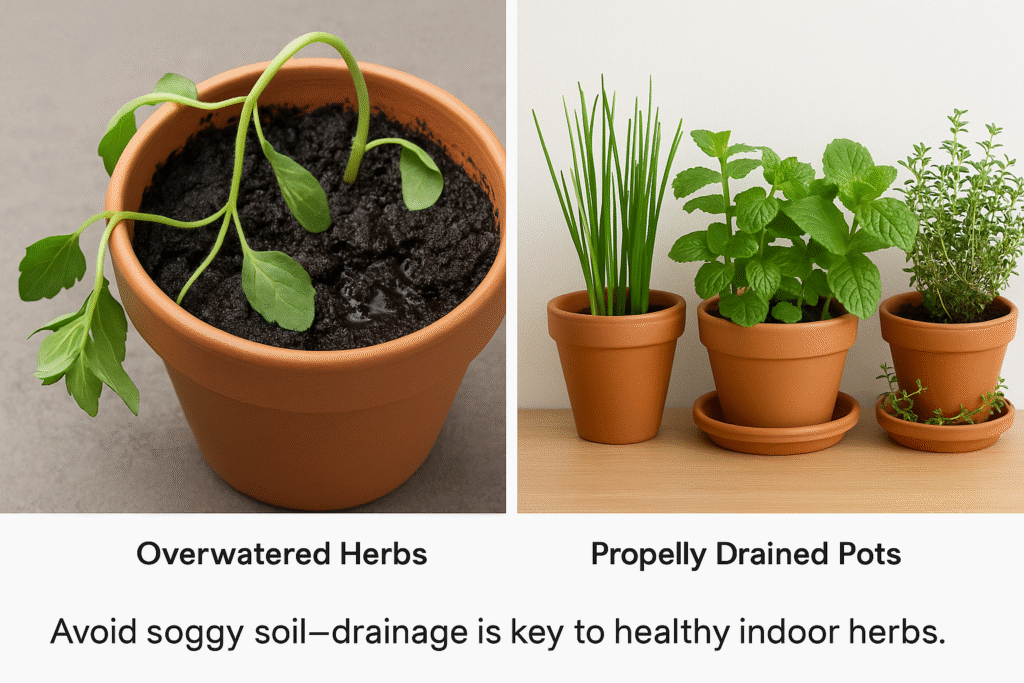
Poor drainage – Use containers with drainage holes and avoid allowing roots to sit in standing water.
Using the same care routine for every herb – Mint and thyme, for example, have very different moisture preferences.
Ignoring weak, leggy growth – Your plant may be telling you that it needs more light.
Neglecting pruning – Regular harvesting and pruning can encourage healthier, more compact plants.
🪴 Creative Ways to Display Your Indoor Herbs
An indoor herb garden can be practical and decorative at the same time.
Depending on your available space, consider:
- Mason jar-style wall planters
- Small windowsill pots
- Rail-mounted hanging pots
- Vertical herb planters
- Magnetic fridge planters
- Floating shelves
- Compact countertop herb gardens
For renters and people with small kitchens, a compact setup can be particularly useful because you don’t need to permanently modify a wall.
Prefer Something Ready-Made?
If you don’t want to build a DIY herb display, a compact windowsill herb planter can provide an easy starting point.
Look for a design with good drainage and, ideally, separate containers. Individual pots make it easier to care for herbs that have different watering requirements.
🌱 A simple option for small spaces:
The Barnyard Designs Indoor Herb Garden Planter Set includes three separate pots in one compact holder, making it a neat option for growing a few herbs together on a windowsill or countertop.
→ Check the Barnyard Designs Indoor Herb Garden Planter on Amazon
🌿 Which Herbs Are Best for a Beginner?
If this is your first indoor herb garden, I’d start small rather than trying to grow all ten herbs at once.
Mint is particularly forgiving and vigorous.
Chives are compact and useful in many everyday meals.
Parsley is another practical choice if you can provide reasonable indirect light.
Starting with two or three herbs allows you to learn how quickly the soil dries in your particular home and how much usable light your growing location actually receives.
Once they’re growing successfully, you can gradually expand your indoor garden.
🏁 Final Thoughts
A lack of direct sunlight doesn’t have to stop you from growing fresh herbs indoors.
So go ahead—transform that shady windowsill into your own mini herb haven!